Whether you do home hemodialysis or in-center hemodialysis, you’ll rely on a hemodialysis machine to filter your blood. The machine filters your blood through a dialyzer, also known as an artificial kidney, with built-in safety checks to be sure the process is safe and effective. Home and in-center hemodialysis machines are very similar in function, though the home machine is much smaller.
What is dialysate? Dialysate is a fluid that is made up of water, electrolytes and salts. During dialysis, dialysate helps to clean your blood inside the dialyzer by removing waste products and balancing electrolytes. Your nephrologist will prescribe the dialysate that is right for your body’s needs.
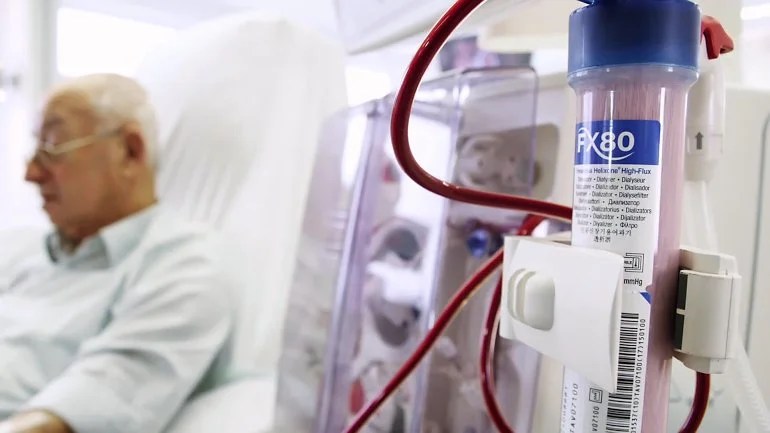
How is my dialysis treatment monitored? During your dialysis session, detailed information will show on the machine’s monitoring screen. Every function will be monitored, including the pump speed, blood pressure and dialysate temperature. Every check is designed to make sure your dialysis session is safe and effective.
Ochri Kidney Division Inducts New Fresenius Medical Care 4008 Dialysis Machine
An alert will sound if anything needs attention. An alert may simply mean the machine needs to be checked or something needs to be adjusted. If you’re doing home hemodialysis, you’ll be trained on what to do for any alert you might hear as part of your overall dialysis and safety training. You can also call your nurse 24/7 if you have questions or need assistance. If you receive in-center hemodialysis, your care team will monitor the machine throughout the process and make any adjustments necessary.
Your treatment will also be monitored through your personal Fresenius Kidney Care Portal. If you’re on home dialysis, you’ll log your daily treatment data for instant delivery to your care team. You’ll also be able to view lab results, track your supply order and communicate with your care team about any issues or concerns.
If the power goes offwhile your cycler is working, it will automatically close all the lines. The machine will store the information about your session using a backup battery. If the power comes back on soon, that stored information lets the machine continue the session. If not, it’s best to call your home dialysis nurse about what to do next—support is available 24/7 if you ever have questions or concerns.
Fresenius Forms New Global Medical Office To Coordinate R&d And Practice Sharing
During a typical dialysis treatment, only a pint of blood is outside of your body being cleaned and returned at any time. One pint is the same amount of blood you give during a donation.
Home hemodialysis machines function similarly to in-center machines, though they’re much smaller and easy to handle. Some home machines can fit on a nightstand—or you can take it with you when you travel.
Register with your local power company to get on their medical priority list. Letting your provider know that you use electricity for home dialysis can help you get your power restored faster.Almost 4.7 million people are treated because of suffering from chronic kidney failure around the world. The kidneys of these patients are unable to filter metabolic toxins and excess water from the blood for excretion through the urine. About 3.8 million patients rely on regular, life-saving dialysis treatment – either at a dialysis clinic or at home – to prevent the damage of further organs these toxins can cause when they accumulate in the blood.
Fresenius 5008 Hemodialysis System
When the kidneys fail, the whole body suffers. As the organs’ ability to filter the blood begins to fail, an excessive amount of protein is often excreted through the urine. The body then lacks this protein. In addition, edemas (retained water) can form in the legs or lungs. In many cases, an insufficient amount of toxins is also removed. These then collect in the blood and can damage other organs. Problems in the digestive tract can appear and even lead to bleeding ulcers. The toxins can even disturb the rhythm of the heart or lead to infection in the pericardium (heart sac). Nervous system disorders have also been observed.
According to estimates, the number of people worldwide suffering from chronic kidney failure and requiring dialysis treatment is rising at a rate of around six percent each year. This is primarily due to a longer life span, which increases the chance of kidney disease. In addition, the treatment of kidney patients in many developing countries is improving. The constantly increasing rates of high blood pressure and diabetes – the main causes of chronic kidney failure – also play a role.
The human kidney is a small biological miracle with an intriguing design and function. It plays a vital role in the body since it is a significant part of the metabolic process. Kidneys come in pairs and are each about eleven centimeters long in an adult and weigh an average of 160 grams.
Fme 2 Fi Lter Hemodialysis System. Online Hdf Related Components And...
The kidneys create urine, which is excreted through the urinary tract. The urine is also used to remove excess water from the body as well as many toxins. The organs also regulate the acid-base balance in the body, preventing the acidification of the blood.
Kidneys also play a key role in the regulation of blood pressure. This is controlled by various hormones that are produced in the kidneys. Another hormone produced by these organs is Erythropoietin, which controls the production of red blood cells in the bone marrow. In addition, the kidneys also adjust calcium levels and play an important part in the production of vitamin D, which contributes to strong bones.

A kidney transplant is the third treatment option for patients with chronic kidney failure. However, there is a very limited supply of donor organs. More than 815, 000 renal patients around the world live with a donor kidney.
Used Fresenius Medical Care 5008 Cordiax Dialysis Machine V4.57 For Sale In Saarbrücken, Germany
Most patients with chronic renal failure receive treatment at a dialysis clinic three to four times a week – either in a dialysis clinic or at home. Modern technology replaces vital kidney functions during treatment. A dialysis machine pumps blood from a special vascular access in the lower arm of the patient into a dialyzer, the so-called artificial kidney. The dialyzer filters metabolic waste products and removes excess water from the blood. These waste products are then flushed out with dialysis solution and the filtered blood is returned to the patient’s body.
While the blood is cleaned inside the dialyzer, the dialysis machine monitors the circulation of blood outside the body and controls the composition of the dialysis fluid. Furthermore, it pumps blood and dialysis solution through the dialyzer in two separate circuits. Anti-coagulants are also added to the blood to prevent it from clotting.
In peritoneal dialysis, the lining of a patient’s abdominal cavity – the peritoneum – acts as the filter for the blood. The peritoneal cavity stores the dialysis fluid and the filtration takes place across the peritoneum. Toxins and excess fluid cross the peritoneal membrane during the treatment and are thereby removed from the body.

Fresenius Dialysis Machine 4008s
A permanent tube, or catheter, that was inserted into the peritoneal cavity is used to introduce the dialysis fluid into the abdominal cavity. The dialysis fluid is fed into the cavity and left to absorb the impurities from the blood. Later, the fluid is drained-off into a bag and replaced with fresh fluid. This process, of filling and draining, can be done manually during the day or automatically over night with a cycler.
In hemodialysis, the dialyzer acts as an artificial kidney and replaces vital functions of the natural organ. Blood flows through as many as 20, 000 extremely fine fibers, known as capillaries, clustered in a plastic tube approximately 30 centimeters long. The capillaries are made of Polysulfone, a special plastic with exceptional filtering and hemocompatibility characteristics. Pores in the capillaries filter metabolic toxins and excess water from the blood and flush them out of the body with dialysis fluid. Blood cells and vital proteins remain in the blood. Dialyzers are used only once in most industrialized countries.
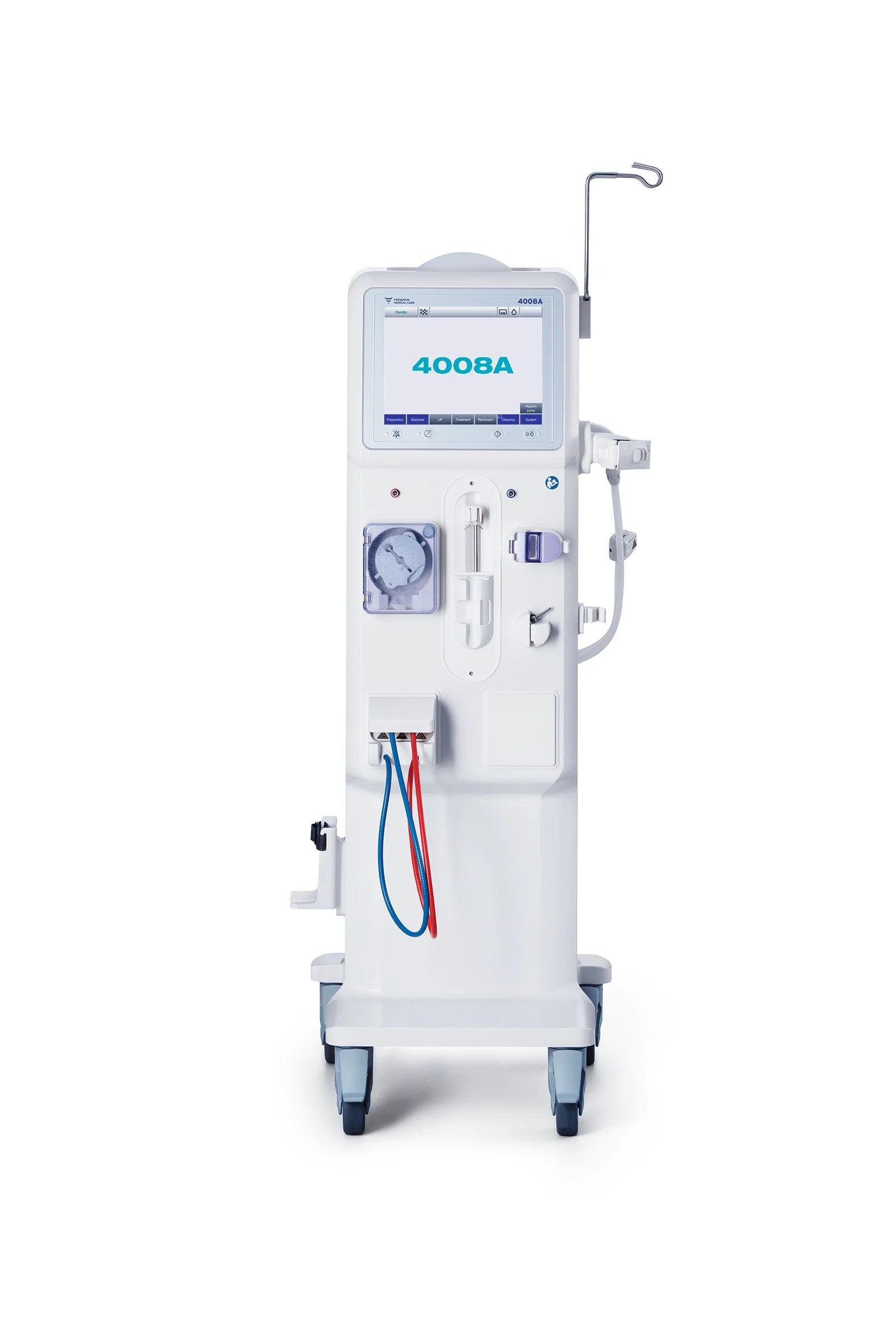
The computer-controlled dialysis machine is one of the most important products in the treatment of chronic renal patients and, in hemodialysis, it takes over a number of key functions – it pumps blood from the patient’s body through the blood lines to the dialyzer (artificial kidney or filter). There, a fluid known as dialysate transports the toxins and excess water filtered from the blood away from the body. The fluid is introduced against the flow of blood through a separate circuit that is also controlled by the dialysis machine. In addition, the device injects drugs (such as Heparin) that restrain coagulation. The system has a number of automatic monitoring and control functions that ensure a safe and efficient dialysis treatment for patients.
Fresenius 4008s Dialysis Machine
In CAPD, the treatments are performed continuously without a machine. Typically, three to five exchanges are done per day in a clean environment – at home, at work or while travelling. In Automated Peritoneal Dialysis (APD), a dialysis machine (cycler) takes over the exchange of fluid, making overnight treatment possible. Most patients carry out both types of treatment themselves, either at home or in the office. This allows them to be flexible and to maintain their normal rhythm of life.

Dialysis may perform most of the kidneys’ vital functions but it can not entirely replace the natural organ. For


